
Kamahi/Koromiko & Bitters Salve
Information
This combination of ingredients supports the body in healing haemorrhoids and similar conditions.
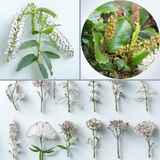
Pterophylla racemosa, commonly known as Kāmahi, holds significant cultural importance, particularly in New Zealand where it is an endemic tree. It was highly valued by Māori before European arrival and was considered almost sacred, protected by tapu(spiritual restriction). Legends suggest that Māori were careful not to cut down all the limbs of a Kāmahi tree, believing that doing so could lead to unfortunate consequences for themselves or their spouses. The bark of Kāmahi contains tannins, which were historically used for dyeing and leather tanning, producing a reddish-brown, colorfast dye. The inner bark was used as a purgative decoction and a laxative. It was also infused in boiling water to create a tonic. While pre-European medicinal uses primarily addressed digestive and skin issues, the bark's tannic acid was an astringent for dysentery and internal hemorrhage, and also used as an abortive and for menstrual pain relief. The leaves were used for scrofulous diseases. The flowers contribute to a distinctive Kāmahi honey in some regions. The leaves were used to line the graves of the dead, representing the spirit of Tane. Kāmahi is one of New Zealand's most common forest trees, forming a graceful, often multi-stemmed crown. It produces abundant creamy-white flower racemes that are a valuable nectar source for insects and birds. It is resilient, adaptable, and a reliable nurse/canopy tree in restoration plantings.
Hebe stricta (Veronica stricta) commonly known as Koromiko is endemic to North and South islands of New Zealand. Medicinally it is the astringent qualities of the young leaf tips that are most highly regarded. They are in fact, so prized as a cure for diarrhea and dysentery that during World War II, Māori in New Zealand sent them to the Māori troops in the Middle East who were suffering from these complaints. They could be either chewed raw (and not swallowed) or the liquid from the steeped leaves was drunk. This same liquid could be stored and used as a cure for liver and bladder complaints.
Swedish Bitters - a combination of bitter herbs, it is included in this formula for it's properties to soothe itching.
Contents
Ingredients: Koromiko 1:5 Ø, Kamahi D1, Swedish Bitters 1:1 Ø in an ointment base of Sunflower Oil (NZ Org); Olive Oil (NZ Biodynamic); Yellow Beeswax (NZ Org);